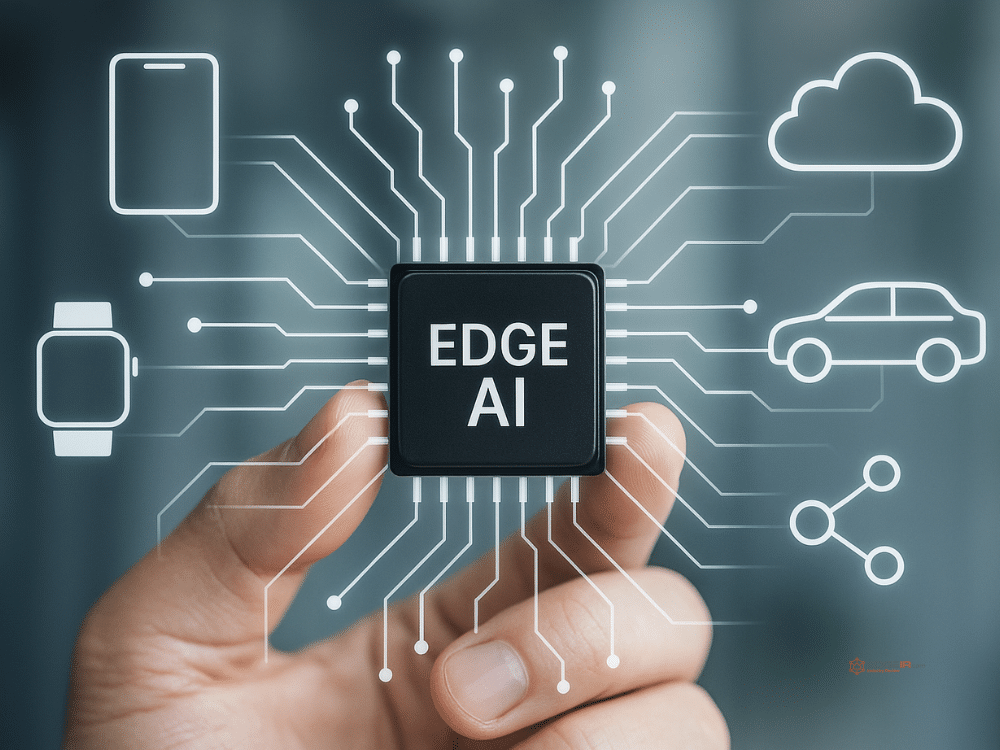
Technology is becoming faster and smarter every year. From smartphones to smart homes, we are surrounded by devices that can think, learn, and make decisions. Most of this intelligence used to depend on cloud computing, where data is sent to powerful servers on the internet for processing.
But in 2026, a new approach is changing everything—Edge AI. This technology allows devices to process data locally, without always needing to send it to the cloud. In simple words, your device itself becomes smart enough to understand and respond instantly.
Edge AI, also called on-device intelligence, is becoming a big trend because it is faster, more secure, and more efficient. It is already being used in smartphones, security cameras, cars, and even home appliances.
For users in India and around the world, this means better performance, improved privacy, and smarter everyday experiences.
What is Edge AI and How Does It Work
Edge AI means running artificial intelligence directly on a device, such as a mobile phone, smartwatch, or IoT device. Instead of sending data to a remote server, the device processes the data on its own.
For example, when you unlock your phone using face recognition, the image is processed on the device itself. It does not need to upload your photo to the internet. This is a simple example of Edge AI in action.
The word “edge” refers to the edge of the network—meaning the device that is closest to the user. These devices have built-in processors and AI chips that can handle tasks like image recognition, voice commands, and data analysis.
One of the biggest advantages of Edge AI is speed. Since data does not need to travel to a server and back, the response time is much faster. This is very important for applications like self-driving cars, where even a small delay can be dangerous.
Another major benefit is privacy. When data stays on your device, there is less risk of it being leaked or misused. This is especially important for personal information like photos, messages, and health data.
Edge AI also reduces internet dependency. In areas where internet connectivity is slow or unstable, devices can still function properly because they do not rely fully on cloud services. This is very useful in many parts of India where network coverage can vary.
Energy efficiency is another advantage. Sending large amounts of data to the cloud requires power. By processing data locally, devices can reduce energy usage and improve battery life.
Today, many devices already use Edge AI. Smartphones use it for camera improvements, voice assistants, and app suggestions. Smart security cameras use it to detect motion or recognise faces. Even wearable devices use it to track health data in real time.
Industries are also using Edge AI. In manufacturing, machines can detect faults instantly. In agriculture, sensors can monitor soil and weather conditions. In healthcare, devices can track patient data continuously.
Why Edge AI is the Future of Technology in 2026 and Beyond
In 2026, the demand for real-time data processing is increasing. People expect instant results, whether it is unlocking a phone, getting navigation directions, or using a voice assistant. Edge AI makes this possible.
One of the biggest reasons for its growth is the rise of smart devices. From smart TVs to smart refrigerators, more devices are becoming connected and intelligent. Edge AI helps these devices work smoothly without depending too much on the internet.
The development of powerful chips is also driving this trend. Modern processors are designed specifically for AI tasks. These chips can handle complex calculations quickly while using less power.
In India, Edge AI has huge potential. With a large population and growing digital usage, there is a need for fast and reliable technology. Edge AI can improve services in areas like education, healthcare, and agriculture.
For example, in rural areas, medical devices powered by Edge AI can help in basic diagnosis even without strong internet connectivity. In education, smart devices can provide personalised learning experiences for students.
Another important factor is data security. As people become more aware of privacy issues, there is a growing demand for solutions that keep data safe. Edge AI addresses this concern by reducing the need to share data online.
Businesses are also benefiting from Edge AI. It allows faster decision-making, reduces server costs, and improves efficiency. Retail stores, for example, can use smart cameras to analyse customer behaviour in real time.
Autonomous systems like self-driving cars and drones depend heavily on Edge AI. These systems need to make quick decisions without waiting for cloud responses. This makes Edge AI essential for their safe operation.
However, there are some challenges. Devices need to have enough processing power to handle AI tasks, which can increase cost. Also, updating AI models on multiple devices can be complex.
Despite these challenges, technology is improving rapidly. Costs are reducing, and tools are becoming more user-friendly. This will make Edge AI more accessible in the coming years.
Looking ahead, Edge AI will become a standard feature in most devices. We may see smarter homes where appliances understand user habits, smarter cities with better traffic management, and smarter healthcare systems with continuous monitoring.
In everyday life, this means more convenience. Your phone will understand your needs better, your home will respond to your preferences, and your devices will work faster and more efficiently.
In conclusion, Edge AI is not just a technical concept—it is a practical solution that is already improving how we use technology. By bringing intelligence directly to devices, it makes technology faster, safer, and more reliable.
As we move forward, on-device intelligence will play a major role in shaping the future of tech. It is not just the next big revolution—it is the foundation of a smarter and more connected world.